
The Silent Epidemic That is Men’s Mental Health
June is Men’s Mental Health Month, calling us to observe and explore a human reality and the ways we can do better as men and as a society.
If I were to say that talking about men's mental health in Namibia, and more broadly across the world, is to talk about a silent epidemic, would you agree?
I think a conversation worth having is that if we as men want to move toward actual healing, we have to start by dismantling the well-meaning inadequacies we’ve built around what "support" does and does not look like for one another.

In The Name of the “Brotherhood”
Do you know that, at many levels, the brotherhood you share with your fellow men is built on an economy of avoidance? Let me explain.
We have a very powerful shorthand for masculinity. You know those silent nods you share with the guys and that understanding you may have that "as long as we’re standing side-by-side, we’re good”?
The reality is that many male friendships can go years without exploring or resolving the deeper traumas, emotional pains, and other concerns that have very real consequences. And when emotions and mental fatigue do manage to enter the room, they can often be met with defensive humour or avoidance. We tend to deflect with banter or even dismiss the need for vulnerability as a weakness or a distraction from the performative strength we have been taught to maintain.
From a young age, we are made to understand that emotional expression is a liability, so we use silence as a shield. A learned defence mechanism to protect ourselves against the fear of being perceived as less than or broken. But this shield, when held too long, eventually becomes a cage.
To break this stigma, we must collectively rewrite the rules of our spaces, and that means we need to learn that admitting you are struggling is not a failure of strength. It can actually be an act of self-awareness.

More and more… men are speaking to their friends and audiences about vulnerability. We see social media posts and messages saying, "I’m here if you ever want to talk," or "I hope my brothers know my door is always open to talk about anything.” This is a wonderful starting point, but we must also be eager enough to do more.
When a man is drowning in depression, anxiety, or the suffocating weight of expectation, the very last thing he might have the capacity to do is build a bridge, cross it, and initiate a heavy conversation. Sometimes we inadvertently place the burden of reaching out on the person who is struggling, and one way to address this is through active intervention.
Active intervention
means doing something when
you notice the subtle changes.
It is recognising when a friend has slowly started withdrawing from the group chat.
It is paying attention when someone's absence becomes a habit.
It is making the call, showing up at their house, or simply creating a space where they can exist without having to perform "strength".
It is moving from "Let me know if you need help" to "I’m coming over".
Let’s Talk About Outsourcing Emotional Labour

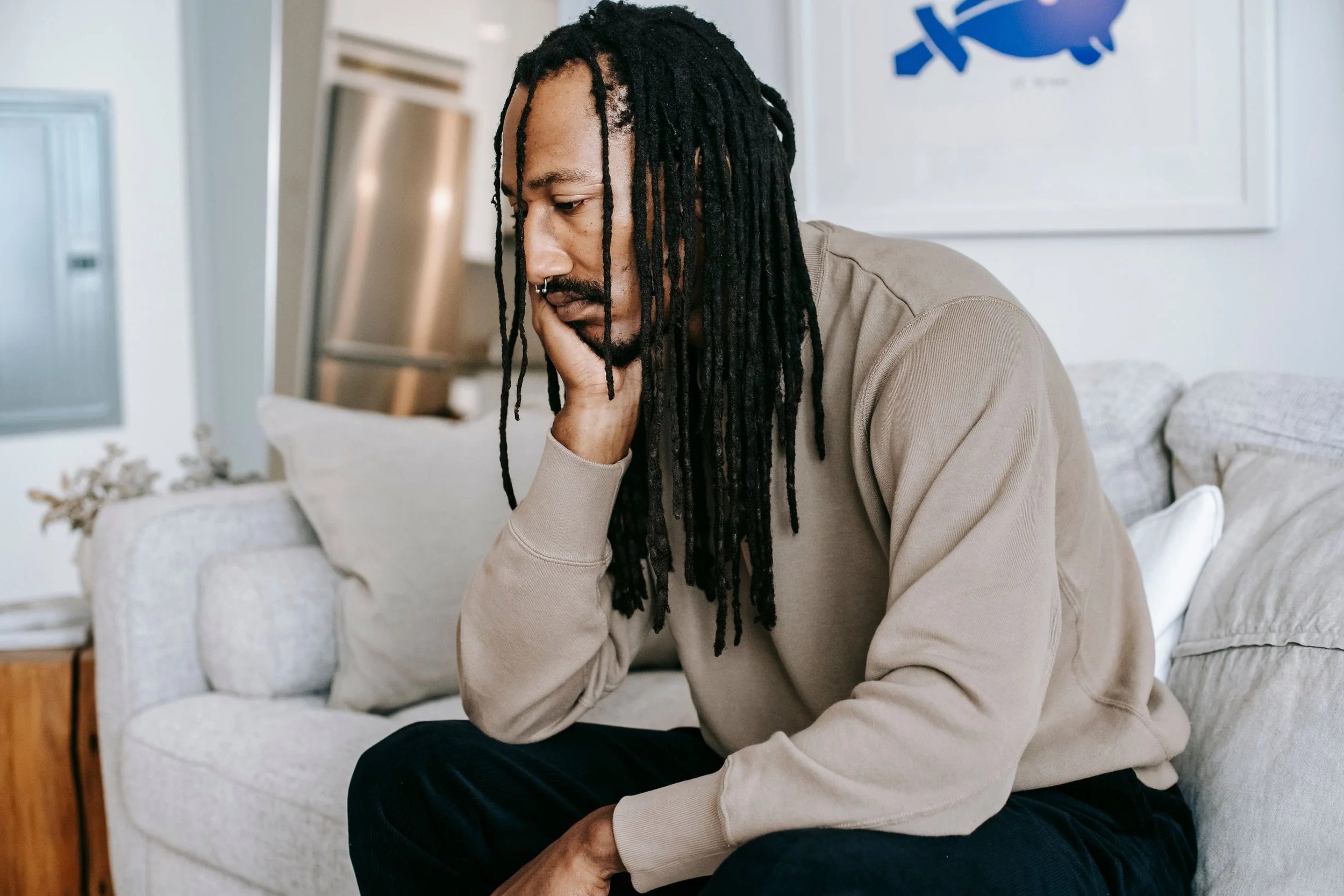

An unfortunate truth we have made the norm is that the mental and emotional healing of men is unfairly outsourced to women.
Society’s default coaxes men to be more vulnerable only with their romantic partners. Consequently, women are expected to play the role of therapist, emotional anchor, and trauma-holder, often while navigating their own unhealed spaces. It is an exhausting, unsustainable distribution of emotional labour. And another, more unfortunate way this interaction is manifested can be through physical, verbal, and emotional abuse.
So the challenge now is to build our own emotional infrastructures, not as a temporary fix, but as a sustainable practice that we can pass on to our sons for long-term emotional and mental stamina. True strength does not mean knuckling our way through the pain and anger, but through repeatable, daily routines.
How Can We Do Better?
Seek professional therapy.
Talk about how you feel with people you trust.
Establish support circles with other men where honesty is prioritised, and leave the judgment at the door.
Daily habits like journaling, mindfulness, and learning the vocabulary of your emotions. If you cannot name how you feel, you cannot process it.
Normalising emotional rest. That means recognising when you have to step away, unplug, and rest without feeling guilt or a loss of purpose.

Where to Seek Help:
Men Let’s Rise. A prominent local safe space and initiative designed specifically to support men's mental health in Namibia. They offer mentorship, support groups, and a judgment-free starting point to discuss challenges related to upbringing, stress, and emotions.
The Delivery Room Foundation is a spiritual and mental health clinic running community outreach programs targeting boys and men in Namibia. They specialise in dealing with anxiety, depression, substance abuse, and stress.
LifeLine/ChildLine Namibia provides free, confidential emotional support and counselling for adults. You can reach their trained counsellors anonymously by dialling 116 or 106 toll-free from any phone, available 24/7.
Windhoek Central Hospital. The hospital features a specialised Mental Health Care Centre. You can request to see a psychologist or psychiatrist through the public health system. Contact +264 61 203 9111.
Being Well Psychology. Based in Pionierspark, Windhoek, this practice offers evidence-based psychological care and counselling for men navigating personal challenges.
Philipi Trust is a faith-based counselling centre that offers highly subsidised therapeutic counselling services for anyone seeking a safe, confidential space.
We need to understand that the consequences of emotional and mental unwellness are devastatingly real, and they can lead to fractured families and a disconnected society. When we lack the tools to process pain, the pain does not vanish. It simply mutates, often turning inward as self-destruction or outward as friction within our relationships.
To the men out there, let this blog be a prompt to look closer at the friends in your life.
Don't wait for them to reach out. Make the call. Show up.
